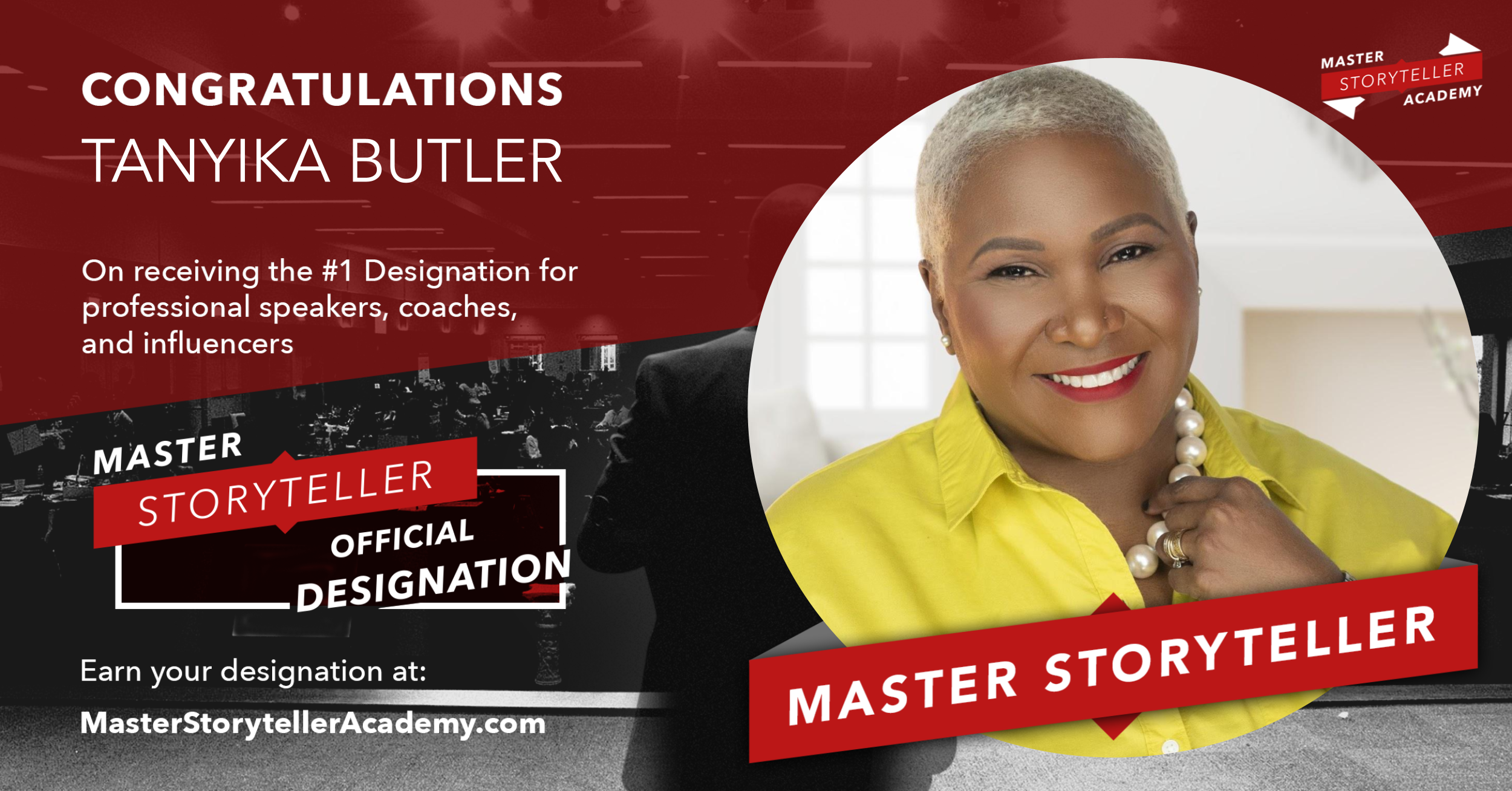
Tanyika Mayhew Butler
Disruptor of High- Functioning Survival Mode  

Speaker | Author  of No More UGLY Wins™


I Got the Ribbons. Then I Started Asking Different Questions.

I still remember my first professional conference. I wasn’t there to speak or win an award. I was just soaking it all in. As I looked around, something stood out. It wasn’t the keynote or the sessions. It was the name badges.
Some people had colorful ribbons under their names: President, Board Member, Presenter, Committee Chair. Ribbon after ribbon. I didn’t have any.
I remember quietly saying to myself, “I’m going to get me some ribbons too.”
That day, a dream was born.
Over the years, I worked hard for those ribbons. I took on leadership roles, joined committees, served others, and took on more responsibility. I earned degrees, built a career I loved, became a school counselor, led organizations, mentored others, and advocated for families. Eventually, my badge had ribbons too, and the dreams I brought to that first conference became real.
One day, I stood on a stage and received one of the highest honors of my career. The room filled with applause. It should have felt like the finish line. Instead, the applause made me start to question things.
Not long before that, I survived acute liver failure. Years earlier, doctors told me my numbness was just stress. It wasn’t. So when I could no longer ignore my exhaustion, I thought I finally understood: it must be burnout.
I did what many high achievers do. I cut back on commitments, stepped away from some responsibilities, tried to find better balance, and kept succeeding. But something still felt off.
The applause should have told me I was on the right path. Instead, it made me question what I had believed for years. It wasn’t that I thought burnout was the wrong answer, but I had done everything I was supposed to do and was still exhausted.
That question stayed with me for the next ten years. I wasn’t trying to build a framework. I just wanted to answer a question my life kept asking me:

Why did success no longer feel the way it once had?

Over time, I realized I had spent almost thirty years doing something for others that I had never done for myself.
As a biology teacher, school counselor, leadership professional, and autism advocate, I spent years teaching educators and families to look beyond the obvious. Behavior is information. One data point isn’t enough. Before deciding what support is needed, we have to understand what we’re really seeing.
But when it came to my own exhaustion, I didn’t do that. I let one data point, I’m exhausted, turn into a quick conclusion: I must be burned out.
What I needed was a change. I had to pause what I thought was true long enough to ask a different question:

What if my exhaustion isn’t burnout?

That question became the foundation of my Disruptor Framework™, a way to challenge the assumptions we make about our exhaustion, uncover what might really be causing it, and look at the part we play in the patterns we’ve gotten used to.
Today, I see these patterns in high-achieving professionals everywhere. They aren’t searching for themselves; they’ve already found their purpose. They’re successful, respected, and making a difference. But at some point, the wins stopped feeling the same.
I got the ribbons I dreamed of, and for a long time, they felt just as I hoped. Each ribbon meant growth, a new opportunity, a chance to serve, and a chance to lead. I loved my career and never wanted another. I stayed in it for twenty-seven years.
But in my forties, something changed. It wasn’t the work, the people, or even my purpose.
It was me.
The wins still mattered. I still got recognition. Opportunities kept coming. But they didn’t energize me like before. I couldn’t explain it at the time. I just knew something felt off.
Looking back, I see the ribbons weren’t the problem. I didn’t realize that each ribbon also meant another commitment, another responsibility, another expectation, and another time I said yes. The ribbons helped build my career, but I never stopped to ask if I still wanted or needed to carry everything they stood for.
That’s the conversation I believe we’re missing.
We often talk about finding ourselves, reinventing ourselves, and starting over. But we rarely talk about editing. It’s not that the career was wrong or the dream was wrong. It’s just that the person who said yes to so many things at thirty might not need to keep saying yes at fifty.

That’s why I wrote No More UGLY Wins™.
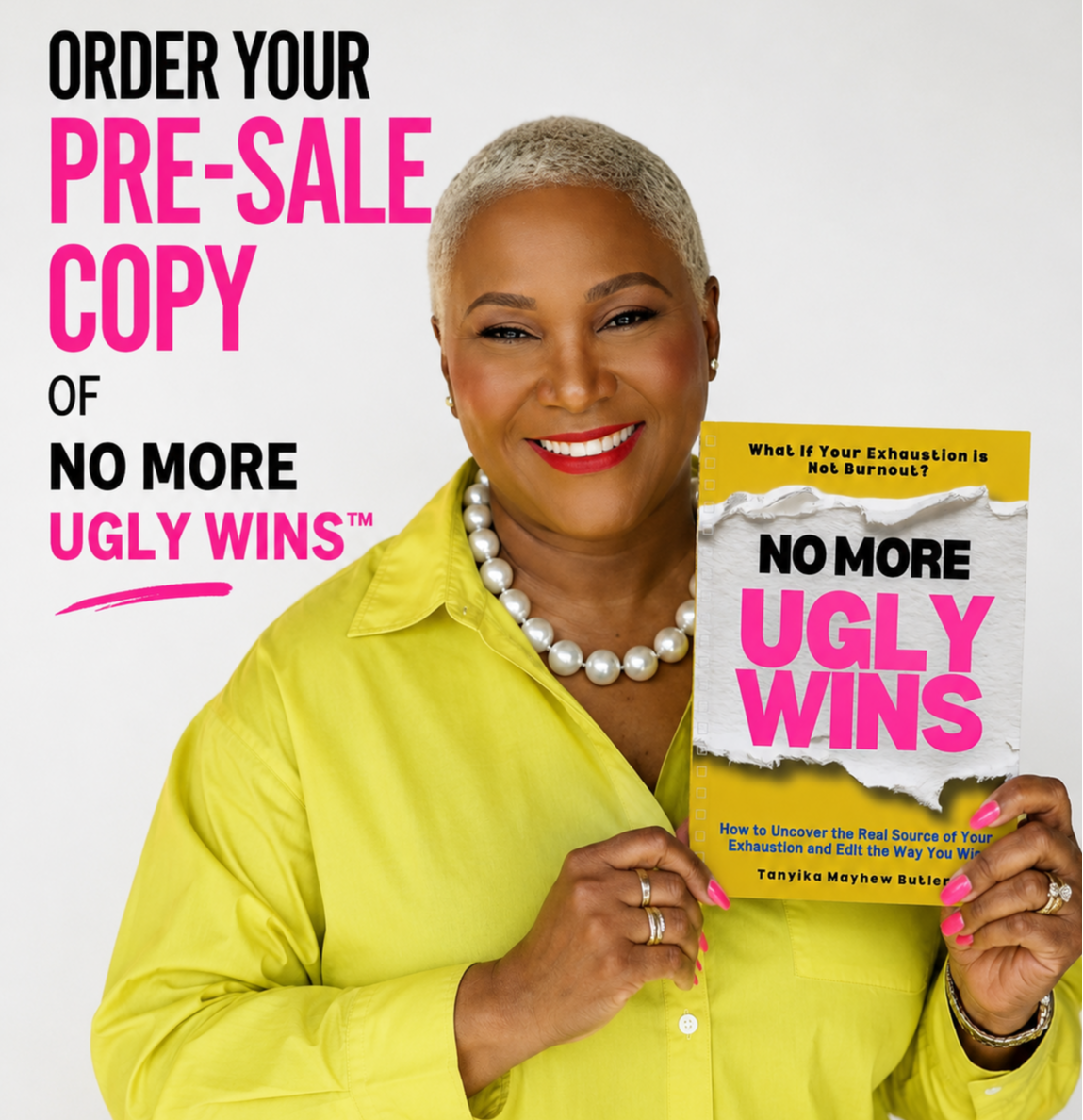
I didn’t write it to tell people to leave their careers, dream smaller, or change everything. I wrote it to help high achievers look at how they’ve been winning, notice what they’ve gotten used to, see the part they play in their exhaustion, and decide if they want to make a change.
The goal isn’t to avoid hard wins. The goal is to stop repeating UGLY Wins™ just because they worked before.
A Strategic Win™ starts when you become aware and use that awareness to choose how you win.
Today, as the Disruptor of High-Functioning Survival Mode™, I share this work with professionals and organizations through my Disruptor Framework™. I don’t start by telling people what to change. I start by challenging the idea that exhaustion always tells us what’s wrong.
Is it Medical? Is it Me? Is it My Work?
From there, we look beneath ongoing performance to find what has become normal just because it kept getting results. Sometimes, the biggest clue isn’t that you’ve stopped winning.
It’s that you’re still winning, but the way you’re doing it has become too exhausting to keep repeating.


Purchase Your Copy of No More UGLY Wins

 How Tanyika Helps Organizations

  • Keynote Speaking
  • Executive Workshops
  • Leadership Experiences


Signature Keynotes

Ginger Ale & Crackers™

What If Burnout Isn't the Problem?

When exhaustion becomes the norm, most people assume the answer is burnout. But what if burnout isn't the diagnosis? What if it's the clue? Through powerful storytelling and practical insight, Tanyika challenges leaders to stop treating symptoms and start uncovering the real source of exhaustion before it leads to burnout, health leave, disengagement, and costly turnover.

Audience Outcomes:

  • Recognize the hidden sources of exhaustion.
  • Distinguish symptoms from root causes.
  • Shift from reacting to burnout to preventing it.

No More UGLY Wins™

When Success No Longer Feels Like Success

High-performing people are still producing results but many are quietly paying a price no one else can see. This keynote helps leaders recognize the habits, commitments, and expectations that have become too expensive to repeat, so they can move from exhausting wins to strategic, repeatable success.

Audience Outcomes:

  • Identify the hidden cost of high performance.
  • Recognize success habits that quietly create exhaustion.
  • Learn how to edit success without abandoning it.

The Burden Bag™

The Invisible Invoice of High Performance

The highest performers often carry responsibilities that were never theirs to begin with. Every unnecessary burden comes with an invisible invoice paid through exhaustion, health, relationships, or retention. This keynote helps leaders identify what belongs to them, what doesn't, and how role clarity creates healthier, stronger organizations.

Audience Outcomes:

  • Uncover invisible burdens that drain performance.
  • Improve role clarity and accountability.
  • Reduce the hidden cost of over-functioning.

 

Start Your Leadership Conversation

Tanyika Mayhew Butler
Disruptor of High Functioning Survival Mode Keynote Speaker | Author | Creator of No More UGLY Wins™

I still remember my first professional conference. I wasn’t there to speak or win an award. I was just soaking it all in. As I looked around, something stood out. It wasn’t the keynote or the sessions. It was the name badges.
Some people had colorful ribbons under their names: President, Board Member, Presenter, Committee Chair. Ribbon after ribbon. I didn’t have any.
I remember quietly saying to myself, “I’m going to get me some ribbons too.”
That day, a dream was born.
Over the years, I worked hard for those ribbons. I took on leadership roles, joined committees, served others, and took on more responsibility. I earned degrees, built a career I loved, became a school counselor, led organizations, mentored others, and advocated for families. Eventually, my badge had ribbons too, and the dreams I brought to that first conference became real.
One day, I stood on a stage and received one of the highest honors of my career. The room filled with applause. It should have felt like the finish line. Instead, the applause made me start to question things.
Not long before that, I survived acute liver failure. Years earlier, doctors told me my numbness was just stress. It wasn’t. So when I could no longer ignore my exhaustion, I thought I finally understood: it must be burnout.
I did what many high achievers do. I cut back on commitments, stepped away from some responsibilities, tried to find better balance, and kept succeeding. But something still felt off.
The applause should have told me I was on the right path. Instead, it made me question what I had believed for years. It wasn’t that I thought burnout was the wrong answer, but I had done everything I was supposed to do and was still exhausted.
That question stayed with me for the next ten years. I wasn’t trying to build a framework. I just wanted to answer a question my life kept asking me:

Why did success no longer feel the way it once had?

Over time, I realized I had spent almost thirty years doing something for others that I had never done for myself.
As a biology teacher, school counselor, leadership professional, and autism advocate, I spent years teaching educators and families to look beyond the obvious. Behavior is information. One data point isn’t enough. Before deciding what support is needed, we have to understand what we’re really seeing.
But when it came to my own exhaustion, I didn’t do that. I let one data point, I’m exhausted, turn into a quick conclusion: I must be burned out.
What I needed was a change. I had to pause what I thought was true long enough to ask a different question:

What if my exhaustion isn’t burnout?

That question became the foundation of my Disruptor Framework™, a way to challenge the assumptions we make about our exhaustion, uncover what might really be causing it, and look at the part we play in the patterns we’ve gotten used to.
Today, I see these patterns in high-achieving professionals everywhere. They aren’t searching for themselves; they’ve already found their purpose. They’re successful, respected, and making a difference. But at some point, the wins stopped feeling the same.
I got the ribbons I dreamed of, and for a long time, they felt just as I hoped. Each ribbon meant growth, a new opportunity, a chance to serve, and a chance to lead. I loved my career and never wanted another. I stayed in it for twenty-seven years.
But in my forties, something changed. It wasn’t the work, the people, or even my purpose.
It was me.
The wins still mattered. I still got recognition. Opportunities kept coming. But they didn’t energize me like before. I couldn’t explain it at the time. I just knew something felt off.
Looking back, I see the ribbons weren’t the problem. I didn’t realize that each ribbon also meant another commitment, another responsibility, another expectation, and another time I said yes. The ribbons helped build my career, but I never stopped to ask if I still wanted or needed to carry everything they stood for.
That’s the conversation I believe we’re missing.
We often talk about finding ourselves, reinventing ourselves, and starting over. But we rarely talk about editing. It’s not that the career was wrong or the dream was wrong. It’s just that the person who said yes to so many things at thirty might not need to keep saying yes at fifty.

That’s why I wrote No More UGLY Wins™.
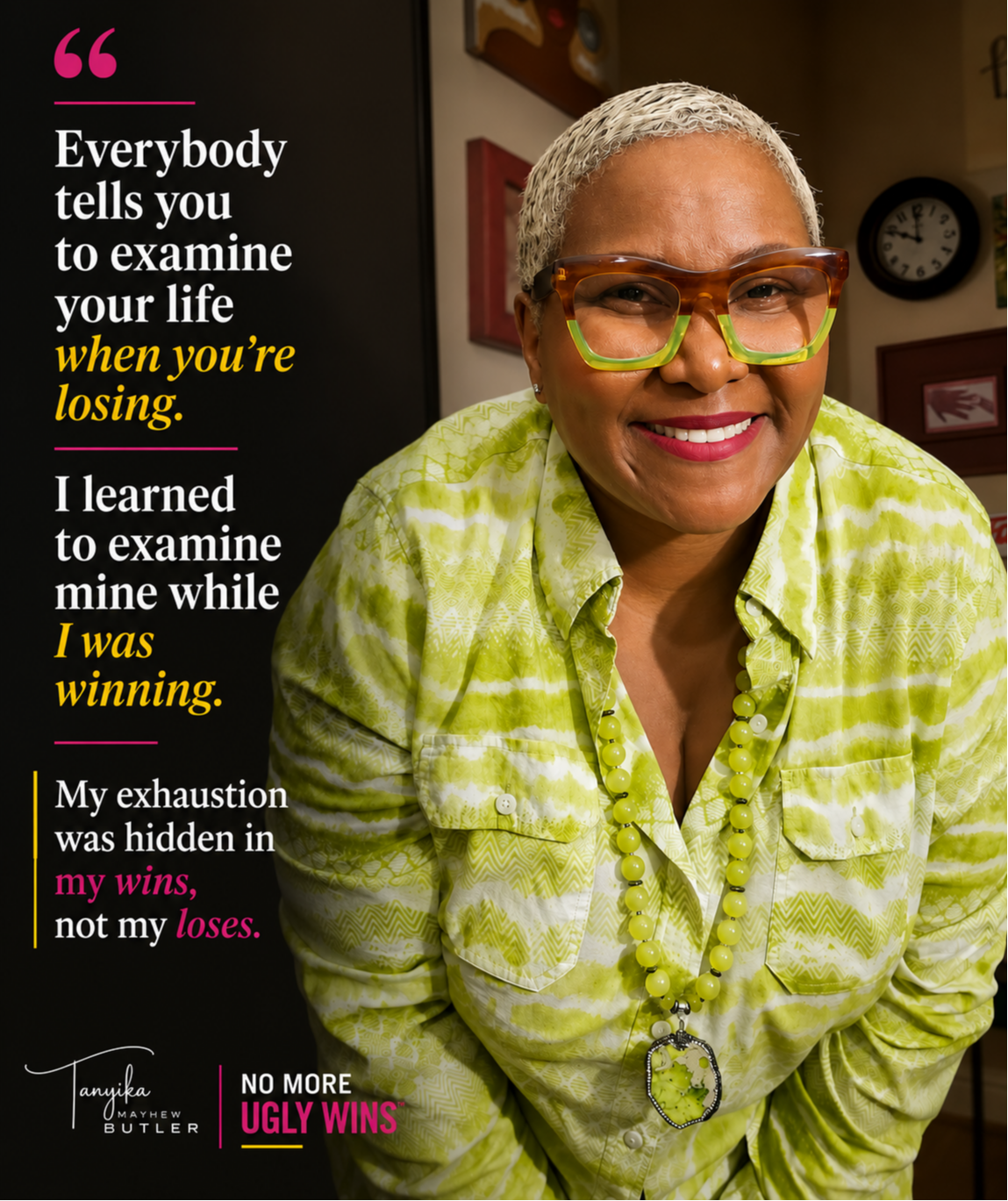
I didn’t write it to tell people to leave their careers, dream smaller, or change everything. I wrote it to help high achievers look at how they’ve been winning, notice what they’ve gotten used to, see the part they play in their exhaustion, and decide if they want to make a change.
The goal isn’t to avoid hard wins. The goal is to stop repeating UGLY Wins™ just because they worked before.
A Strategic Win™ starts when you become aware and use that awareness to choose how you win.
Today, as the Disruptor of High-Functioning Survival Mode™, I share this work with professionals and organizations through my Disruptor Framework™. I don’t start by telling people what to change. I start by challenging the idea that exhaustion always tells us what’s wrong.
Is it Medical? Is it Me? Is it My Work?
From there, we look beneath ongoing performance to find what has become normal just because it kept getting results. Sometimes, the biggest clue isn’t that you’ve stopped winning.
It’s that you’re still winning, but the way you’re doing it has become too exhausting to keep repeating.


Order Your Copy of "No More Ugly Wins"

Signature Keynotes

Ginger Ale & Crackers™

What If Burnout Isn't the Problem?

When exhaustion becomes the norm, most people assume the answer is burnout. But what if burnout isn't the diagnosis? What if it's the clue? Through powerful storytelling and practical insight, Tanyika challenges leaders to stop treating symptoms and start uncovering the real source of exhaustion before it leads to burnout, health leave, disengagement, and costly turnover.

Audience Outcomes:

  • Recognize the hidden sources of exhaustion.
  • Distinguish symptoms from root causes.
  • Shift from reacting to burnout to preventing it.

No More UGLY Wins™

When Success No Longer Feels Like Success

High-performing people are still producing results but many are quietly paying a price no one else can see. This keynote helps leaders recognize the habits, commitments, and expectations that have become too expensive to repeat, so they can move from exhausting wins to strategic, repeatable success.

Audience Outcomes:

  • Identify the hidden cost of high performance.
  • Recognize success habits that quietly create exhaustion.
  • Learn how to edit success without abandoning it.

The Burden Bag™

The Invisible Invoice of High Performance

The highest performers often carry responsibilities that were never theirs to begin with. Every unnecessary burden comes with an invisible invoice paid through exhaustion, health, relationships, or retention. This keynote helps leaders identify what belongs to them, what doesn't, and how role clarity creates healthier, stronger organizations.

Audience Outcomes:

  • Uncover invisible burdens that drain performance.
  • Improve role clarity and accountability.
  • Reduce the hidden cost of over-functioning.


Ready to Work with Tanyika

 How to Work with Tanyika One-on-One 

Learn More About Working 1:1

“You’re not burnt out, you’re just functionally exhausted.”

Take this FREE 5-page audit to see where your peace is leaking and how to start recovering your rhythm.